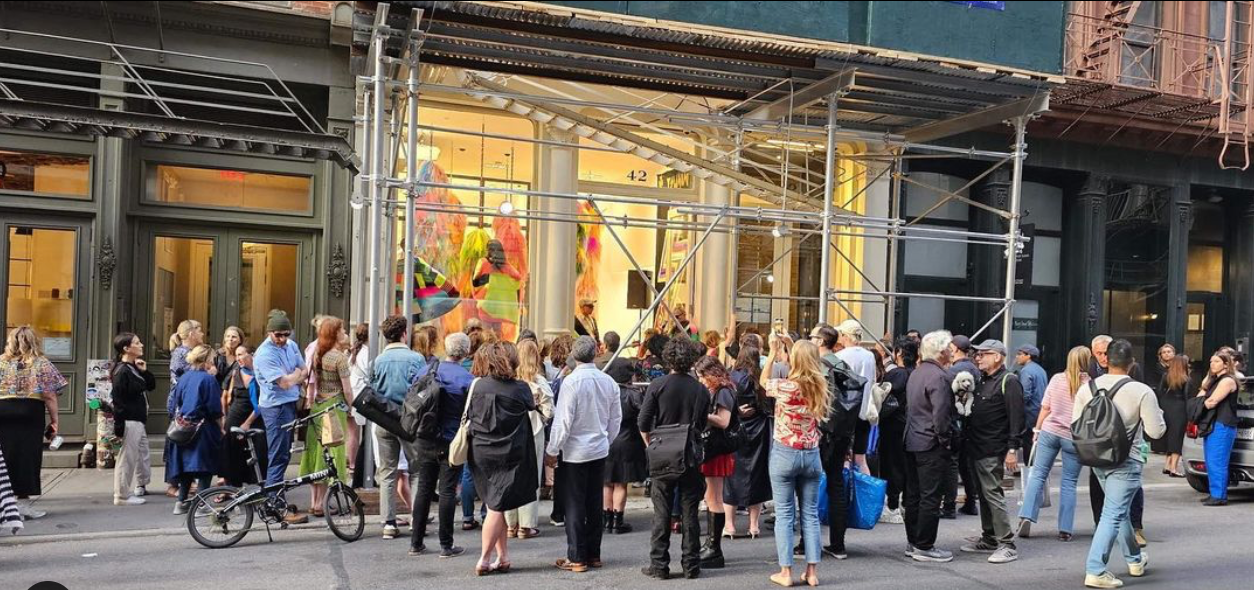
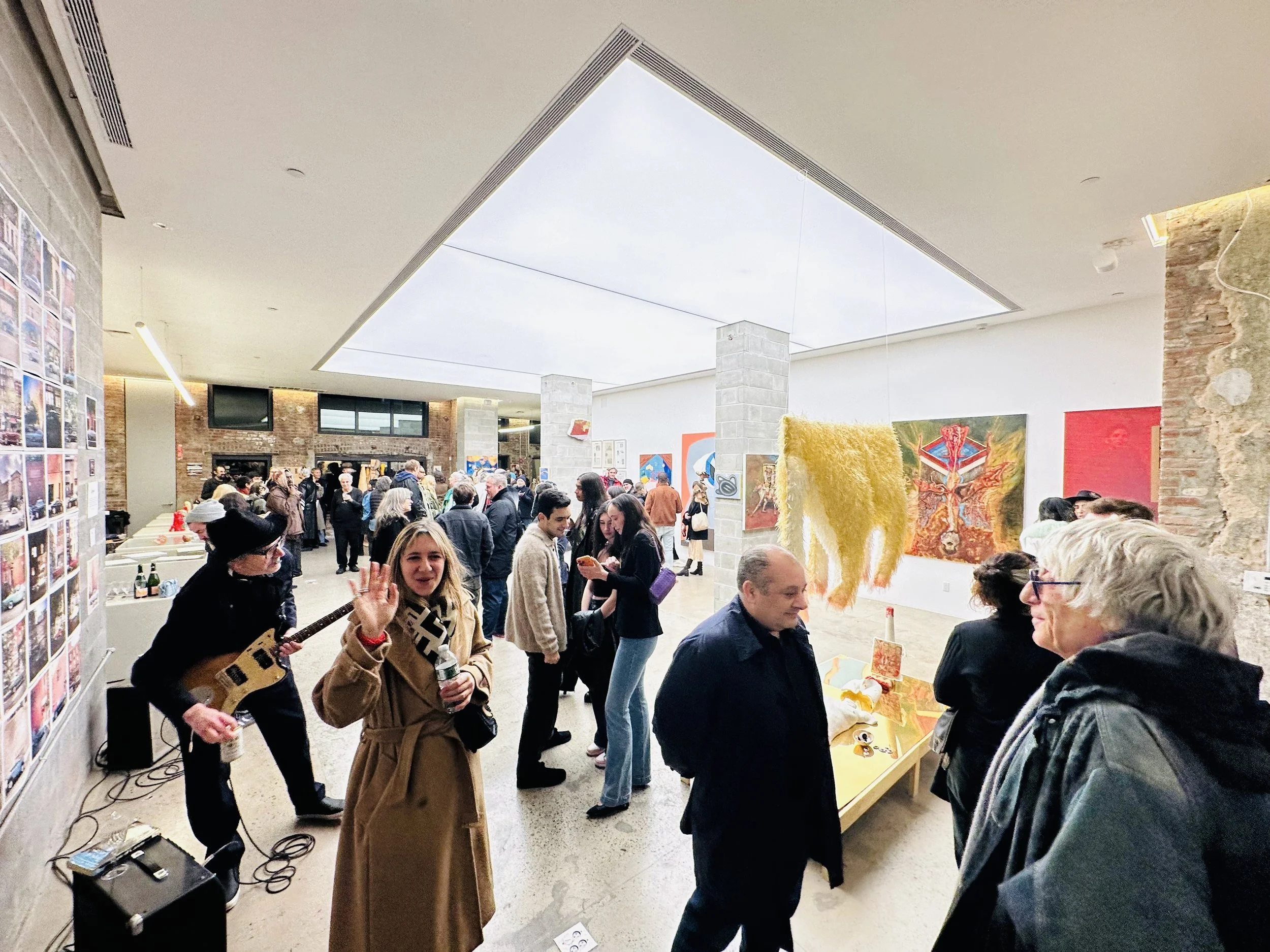
The Opening Gallery focuses on live projects like Chromocommons, the group exhibition featuring Fathom a selection of new works by Shoplifter/Hrafnhildur Arnardóttir and works by the artist collective The Callas, Misha Milovanovich, Leah Singer and Tula Plumi curated by Sozita Goudouna.
The exhibition coincides with the release of a unique publication by Leah Singer and a signed limited edition, as well as a series of numbered prints. The history of art is inseparable from the history of color and this history is also a shared history. Chromocommons presents and puts on display sculptures, two-dimensional pieces, and live acts that explore the ways colors hint at connectivity and the ways they can be commons that enable us to create and live differently.
Art Fairs
Art Fairs
OPENING GALLERY
PARTICIPATION IN NEW YORK ART FAIRS:
FUTURE ART FAIR
SPRING/BREAK ART FAIR
FOCUS ART FAIR
Projects
-
![LATE START FOR MARDI GRAS]()
Soho Loft Project
New York, March, 2025
SoHo Loft Project
The Opening Gallery is pleased to present a new project focusing on the history and present of New York SoHo Lofts featuring a group exhibition entitled LATE START FOR MARDI GRAS, a collaborative project between Max Blagg & 21 featured artists on April 9, 2025, from 6.30-9 PM at 115 Wooster Street.
Max Blagg will read a selection of poems from the series, accompanied by a group exhibition of the 21 corresponding collaborative artworks.
THE SOHO LOFT PROJECT
SoHo and New York City in the 1970s were pivotal in shaping the landscape of fine arts and interdisciplinary arts. The neighborhood of SoHo, originally a manufacturing district, became a haven for artists seeking affordable studio spaces. The rent was low, and the large, open lofts provided ideal environments for creative experimentation. Artists began to form communities, creating a collaborative atmosphere that encouraged interdisciplinary approaches. This led to innovative crossovers between painting, sculpture, performance, and installation art.
The 1970s saw the rise of Minimalism and Conceptual Art, movements that challenged traditional notions of art. Artists like Donald Judd and Sol LeWitt based their practices in SoHo, pushing boundaries and exploring new ideas about form and concept. These movements emphasized ideas over aesthetics, paving the way for future interdisciplinary practices where art could intersect with philosophy, language, and social commentary. SoHo became a center for performance art, with artists like Marina Abramović and Laurie Anderson pushing the limits of what art could be. Performance art often blended elements of theater, dance, and visual arts, reflecting the fluidity of artistic boundaries. The era’s focus on personal narrative and the body as a medium allowed artists to engage directly with social issues, making art a tool for activism and dialogue.
The social upheaval of the 1970s, including movements for civil rights, feminism, and LGBTQ+ rights, influenced artists to reflect on and respond to contemporary issues. Art became a way to challenge societal norms and provoke thought.The rise of alternative spaces and galleries in SoHo provided platforms for marginalized voices, leading to a more inclusive art scene that highlighted issues of identity, race, and gender. Major institutions like the Museum of Modern Art (MoMA) and the Whitney Museum began to recognize and support the burgeoning contemporary art scene. This validation helped to legitimize new artistic practices and broadened the public’s understanding of what constituted art. The establishment of new galleries and art spaces in SoHo and beyond facilitated the promotion of emerging artists, fostering a vibrant ecosystem for innovation.
Artists in the 1970s often collaborated with musicians, dancers, filmmakers, and writers, breaking down the barriers between disciplines. This intersection led to groundbreaking works that influenced multiple fields. The integration of technology into art also began to take shape during this era, with artists experimenting with video, sound, and new media, laying the groundwork for future digital art movements.
The impact of SoHo and New York City in the 1970s on fine arts and interdisciplinary arts cannot be overstated. The convergence of artist communities, innovative movements, and a politically charged atmosphere fostered an environment ripe for experimentation and collaboration. This period not only transformed the art world but also set the stage for contemporary practices that continue to evolve today. The social movements of the 1970s had a profound influence on artistic expression, shaping the themes, styles, and practices of artists across various disciplines.
Artists began to address issues of race, identity, and social justice in their work. The civil rights struggle inspired African American artists to create pieces that reflected their experiences and the fight against systemic racism. Movements like the Black Arts Movement emphasized the importance of cultural identity, leading to a resurgence of African and African American themes in visual arts, literature, and performance.
Feminism challenged traditional gender roles and the way women were represented in art. Female artists sought to reclaim their narratives and address issues such as objectification, sexuality, and domesticity. Artists like Judy Chicago and Miriam Schapiro created works that celebrated women’s experiences and contributions, often using mixed media and installation to convey their messages. The feminist art movement also encouraged collaboration and community, leading to the establishment of women-focused art spaces and exhibitions.The fight for LGBTQ+ rights gained momentum in the 1970s, with artists using their work to advocate for visibility and acceptance. This was reflected in art that addressed themes of sexuality, identity, and community.
Artists such as David Hockney and Keith Haring brought queer identity into the mainstream, using bold colors and imagery to challenge societal norms and promote LGBTQ+ culture. Growing awareness of environmental issues in the 1970s inspired artists to explore themes related to nature, ecology, and sustainability. Eco-artists began to use natural materials and engage with the landscape in their work. This movement encouraged a shift towards art that not only represented environmental issues but also sought to raise awareness and inspire action for ecological preservation.
The Vietnam War sparked widespread protests and dissent, leading artists to create politically charged works that critiqued war and militarism. This resulted in powerful imagery that conveyed the horrors of conflict and the impact on society. Artists used various mediums, including posters, photography, and performance, to communicate their anti-war sentiments and engage audiences in discussions about peace and justice. The counterculture of the 1960s and 1970s brought about a rejection of mainstream values, which influenced artistic expression. Artists experimented with psychedelic art, street art, and new media, embracing non-traditional forms and styles. This period saw the rise of performance art and happenings, where the boundary between artist and audience blurred, reflecting the era’s emphasis on experiential and participatory art.
The interconnectedness of various social movements led to a more nuanced understanding of identity and experience in art. Artists began to explore the intersections of race, gender, sexuality, and class, creating works that reflected the complexity of contemporary society. This emphasis on intersectionality contributed to a broader and more inclusive art discourse, prompting artists to engage with multiple perspectives and narratives.
The social movements of the 1970s were instrumental in shaping artistic expression, leading to a more politically engaged and socially conscious art scene. Artists responded to the challenges and changes in society, using their work as a platform for advocacy, reflection, and innovation. This era laid the groundwork for contemporary art practices that continue to explore and address pressing social issues.
MAX BLAGG
GROUP EXHIBITION “LATE START FOR MARDI GRAS”
LATE START FOR MARDI GRAS began in 2019 with a 200-page printout of a Blagg manuscript from 2011, randomly stitched onto raw canvas by J. Huminska, and tacked to his studio walls for further editing and redaction while he convalesced from a tick-borne illness. As the canvases accumulated and he recovered, Blagg began inviting artists to embellish, demolish, erase or praise the ‘text-canvases’, however they saw fit. Artists chose their piece by title or text, working directly on the canvas or in some cases creating an entirely new piece. The project took its name from the 1st piece completed, entitled LSFMG, by Walter Robinson.
This collaboration eventually culminated in a collection of 21 poems and 21 artworks, that were reproduced in a 7-volume series of red thread stitch bound, hand assembled and boxed sets of booklets in NYC, published in an edition of 50. LSFMG features the work of the following artists: Golnar Adili, Ellen Berkenblit, Ernesto Caivano, Michael Combs, Peter Dayton, Sally Egbert, Eric Fischl, James Gilroy, Nan Goldin, Michael Halsband, Curtis Kulig, Justen Ladda, Ruth Marten, Jamie Nares, Walter Robinson, Nick Rule, Will Ryman, Ken Tisa, Walter Schrank, Ryan Wallace, and Lucy Winton. This 192-page softcover compendium mirrors the project’s booklet series in its entirety.
MAX BLAGG
Max Blagg, born in England, has lived in NYC since 1971. Long recognized as a highly respected poet, visual artist and performer on the New York art & literary scene, he has appeared at innumerable venues including Tin Pan Alley, Jackie 60, Kitchen, Drawing Center, Guggenheim Museum, Parrish Museum, St. Mark’s Church, The National Arts Club & Bowery Poetry Club. Blagg has also been collaborating with artists since the 1970’s, notably the Hotel Firbank Project with Ken Tisa, featured at PS 1 in 1980, and a poem/painting with Richard Prince as part of the “Protest Paintings” series that was included in Prince’s retrospective at Guggenheim Museum, 2007; Collaborative readings/performances with Ethyl Eichelberger, Nan Goldin; and written collaborative texts for various artists including Alex Katz, James Brown, Ralph Gibson, Larry Clark, Jerelyn Hanrahan, and Keith Sonnier. Blagg has published several volumes of poetry & prose internationally & in the U.S. with Aloes Books, Carpe Diem Press, Lumen Editions/Boston, and Shallow Books. He lives in New York City, where he continues to write, collaborate, and liberate his poetry from the page, onto walls, windows, tree stumps and other moveable and stationary objects.
-
![The New York Arab Festival (NYAF)]()
ATELIER JOLIE: AHMED YACOUBI
May, 2025
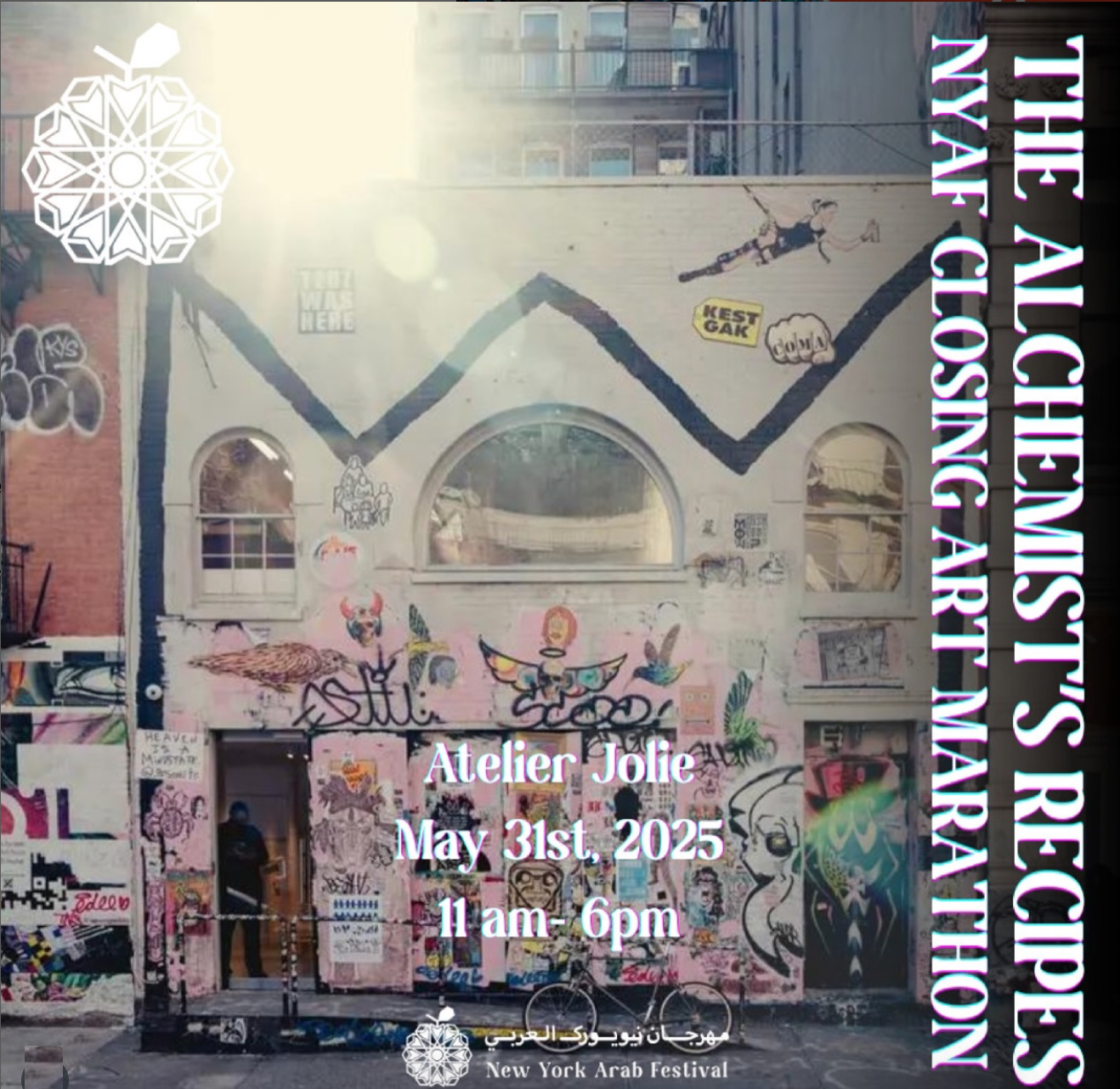
The New York Arab Festival (NYAF) culminates its fourth edition with a vibrant, day-long celebration titled The Alchemist’s Recipes, hosted at the iconic Atelier Jolie at 57 Great Jones Street. The event takes place on May 31 from 11:00am-6:00pm.
This closing art-marathon honors the legacy of Moroccan painter and playwright Ahmed Yacoubi, weaving together his visual art with contemporary Arab voices through food, poetry, film, and live performance.
This closing event is co-curated by Sozita Goudouna and Adham Hafez, and presented in partnership with The Invisible Dog Art Center. The event runs from 11:00 AM to 6:00 PM. It features rare works from the Ahmed Yacoubi Collection, exhibited for the first time at Atelier Jolie. The program includes a Moroccan mint tea welcome, a tagine lunch by Chef Rkia of OffBeat Eats—a collective of refugee and displaced chefs, a talk by curator and writer Omar Berrada on the stories of self-taught artist Ahmed Yacoubi and his exchanges with New York galleries, a cooking demonstration by Lucien Zayan based on Ahmed Yacoubi’s iconic book ‘the Alchemist’s Recipes’, a reading by actor and writer Amr Kotb based on the works of Ahmed Yacoubi, and a closing solo acoustic set by Tunisian-American star EMEL, presenting a selection of her iconic songs in an unplugged setting for the first time. Throughout the day, Arab art films will be screened in the basement studio, and selected paintings by Ahmed Yacoubi will be on display.
Atelier Jolie, founded by Angelina Jolie, is a socially conscious fashion studio located in a historic building that once housed artists Andy Warhol and Jean-Michel Basquiat. The venue's rich artistic heritage and commitment to community engagement make it a fitting location for this celebration of Arab culture, as well as the closing events for the New York Arab Festival (NYAF) this year, concluding a two-month-long program of arts and culture.
NYAF is curated by Adham Hafez, produced by Cindy Sibilsky, managed by Sandra Geovany, Nader Hafez and Adam Kucharski, with the RASEEF program on art, architecture and urbanism curated by Adam Kucharski. The festival is a project of HaRaKa Platform and is powered by Wizara. This year’s focus on art history is supported by Tawareekh: Contemporary Arab Art Histories, an art-history documentation project by scholar, curator and artist Adham Hafez.
Established by Arab, Arab American, and American curators, producers, and artists, New York Arab Festival is New York City's premier festival dedicated to Arab and Arab American arts and culture. Each year, the festival presents a diverse array of performances, exhibitions, panels, films, concerts, and culinary events across multiple boroughs. This year's edition emphasized themes of resilience and transformation, featuring artists from Egypt, Lebanon, Saudi Arabia, Morocco, Tunisia, and Palestine.
ABOUT NYAF: A Celebration of Arab Arts and Voices
The New York Arab Festival (NYAF) was founded in 2022 by Arab, Arab American, and American artists, curators, and producers to amplify the voices and creative expression of Arab communities in the U.S. and abroad. Over the past four editions, the festival has grown into a city-wide cultural movement, offering performances, panels, exhibitions, culinary experiences, and film screenings across all five boroughs. Highlights have included artists such as filmmaker and choreographer Sarah Brahim (KSA), singer and performance artist H. Sinno (Lebanon), filmmaker and multimedia artist Khaled Jarrar (Palestine), composer Maurice Louca (Egypt), Choreographer Leyya Mona Tawil (US/Syria/Palestine), fashion designer Mona Hamid (Sudan/ USA), poet and writer Zeinab Ftes (Libya) among others. The festival is made possible through partnerships with esteemed New York institutions and spaces, including the Museum of the Moving Image, National Sawdust, Atelier Jolie, La MaMa ETC, Nublu, LPR, The Invisible Dog, among many others.
-
![Bofill's exhibition at Angel Orensanz Foundation]()
Double Portraits
New York, 2025
The Opening Gallery is pleased to collaborate with Spanish artist Joan Bofill for the upcoming exhibition: Joan Bofill. Double portrait, curated by Carlo McCormick. Installed across The Angel Orensanz Foundation the exhibition inaugurates The Opening Gallery’s program of location driven projects in Manhattan.
Spanish artist's innovative practice merges documentary filmmaking with portraiture in rare New York exhibition.
There's a moment in every meaningful conversation when the formal structure dissolves and something unexpected emerges—a gesture, a pause, an unguarded revelation. Spanish visual artist Joan Bofill has built a practice around capturing these ephemeral instants, transforming intimate dialogues with cultural figures into what he calls Double portraits—works that exist simultaneously as drawings and filmed conversations.
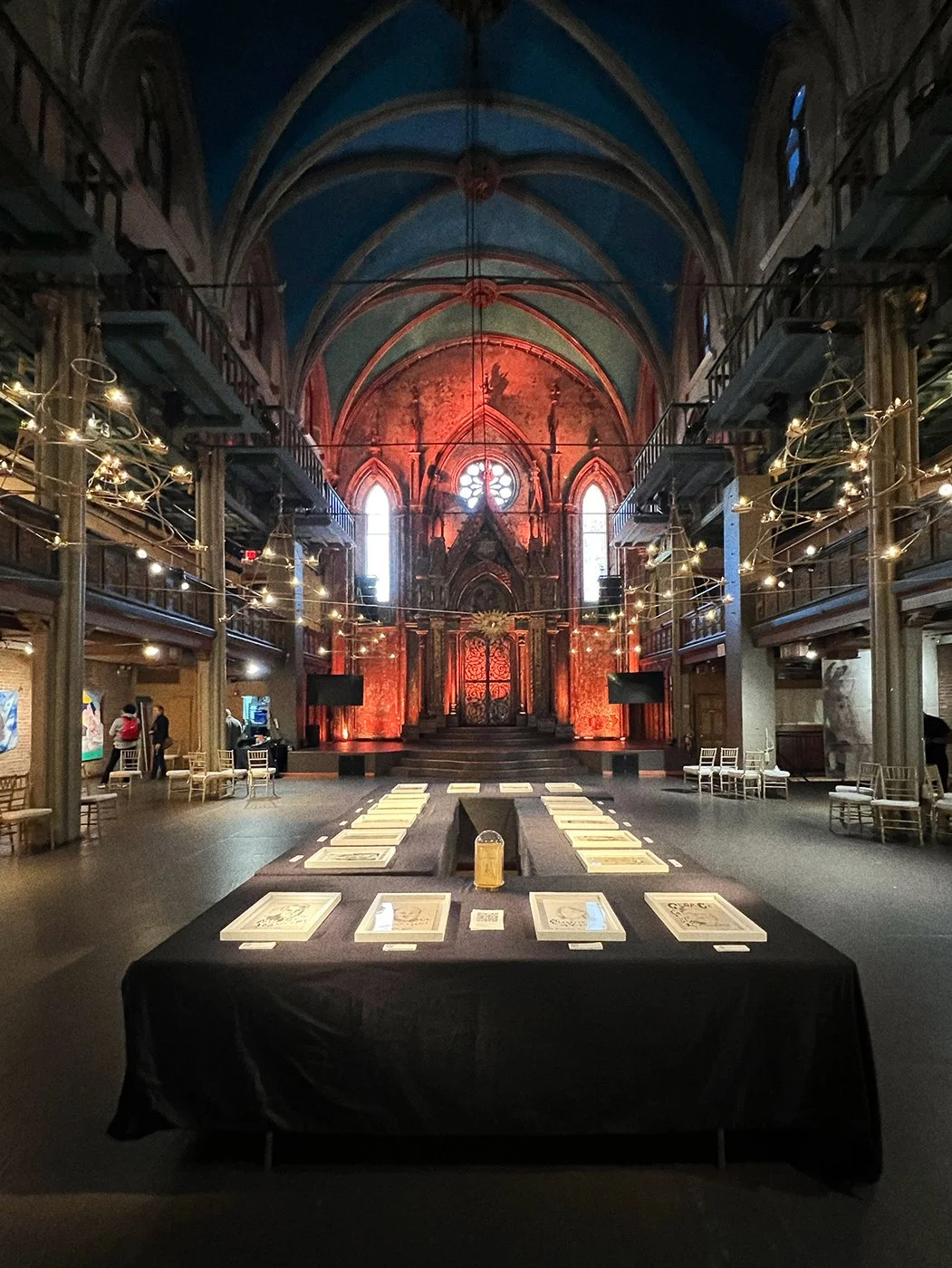
Bofill's exhibition Double portrait: paintings in conversation opens October 16 at the Angel Orensanz Foundation, marking a rare New York presentation of work that challenges conventional notions of both portraiture and documentary. The show runs for just two days, creating its own sense of occasion inspired by Raymond Roussel's theatrical imagination.
"Roussel gave me the assurance that I too had a voice, capable of navigating between reason and intuition," Bofill explains.
The project emerged from Bofill's documentary work on the enigmatic French writer. "During those interviews, I began sketching people I spoke with—sometimes just quick notes during a phone call," he recalls. What started as incidental portraiture evolved into deliberate practice where drawing and conversation became inseparable.
The breakthrough came with Bofill's documentary film The hanging of Stuart Cornfeld—selected to premiere at the American Film Institute Festival on October 23, 2025. Bofill interviewed the iconoclastic producer (The elephant man, History of the world part 1, Zoolander, Tropic thunder) while simultaneously drawing his portrait. "I alternated structured questions with open conversation while drawing. The result was not only an image, but a trace of encounter."
That trace became the foundation for portraits of filmmakers David Lynch, Claudia Llosa, David Cronenberg, Guillermo del Toro, and Mel Brooks; artists Jan Švankmajer, Joe Coleman, Robt. Williams, and performance artist Johanna Went; writers George Saunders, Michel Butor, and Armando Valladares; musician Jon Batiste; chess grandmaster Garry Kasparov; and most recently, previously exiled Princess Elizabeth Karadordevic, daughter of Paul of Yugoslavia, in Belgrade.
Bofill resists celebrity framing. "Through each conversation an almost Venn-like collective of connection emerges where the portraits become more about the spirit and artifacts of the encounters themselves," he says. The drawings—initially made with whatever materials were at hand, later with markers (like his Lynch portrait), eventually settling into graphite and Chinese ink—capture the rhythm of thought, the cadence of speech, the particular attention that emerges when two people sit in focused dialogue.
The "double" in Double Portrait refers to this multiplicity. Each work exists as both object and document. Visitors encounter drawings alongside screens displaying the conversations that generated them—a hybrid form existing between media.
For this presentation, Bofill expands into Paintings in conversation, incorporating paintings and works from different periods. The centerpiece is a rare Japanese Roussel edition, originally dedicated "to Joan Bofill" with the name torn away. Bofill inscribed his own name. "I invited myself into his game."
The Angel Orensanz Foundation's neo-Gothic synagogue provides an ideal setting for work existing at the intersection of portraiture and documentary, European and American perspectives, intimate conversation, and public presentation.
"To portray is not only to depict a face, but to celebrate encounter in its broadest sense," Bofill explains. In an era when authentic cultural dialogue feels increasingly rare, his practice offers proof that meaningful exchange remains possible…and vitally important.
Artists
Opening Art Initiative

Andres Serrano
under construction.
Orlan
Under construction.
Third Bird
Under construction.
Kenneth Goldsmith
Under construction.
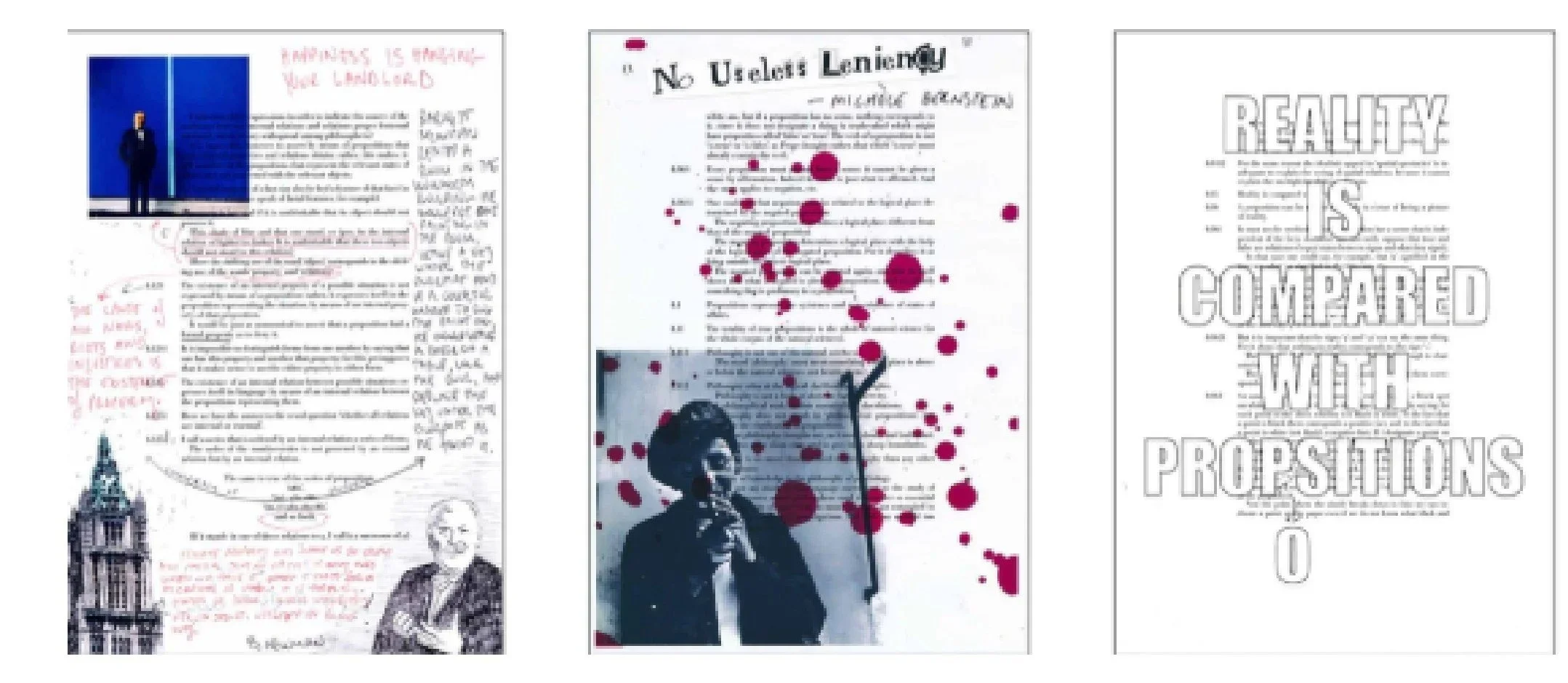
Rainer Ganahl
Under construction.
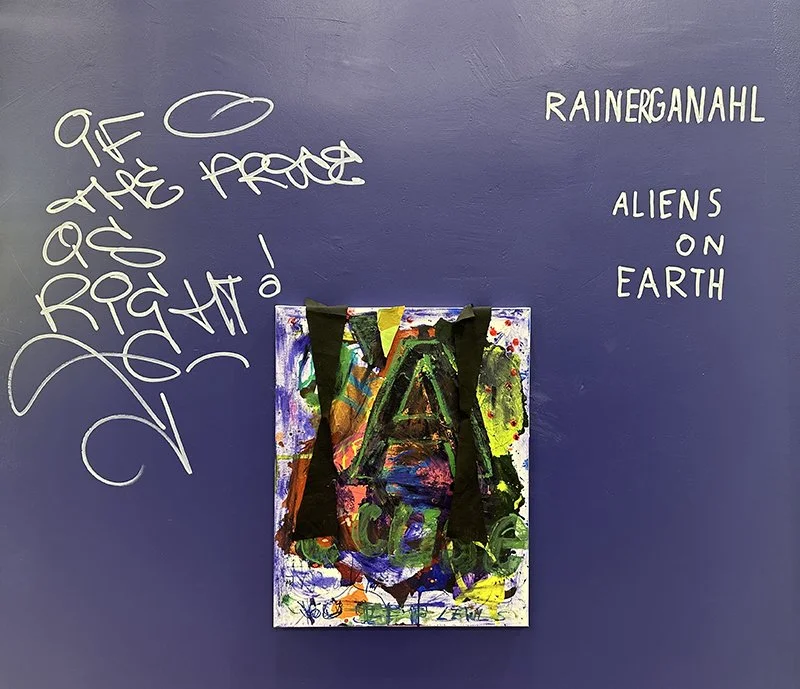
Hans Weigand
Under construction.
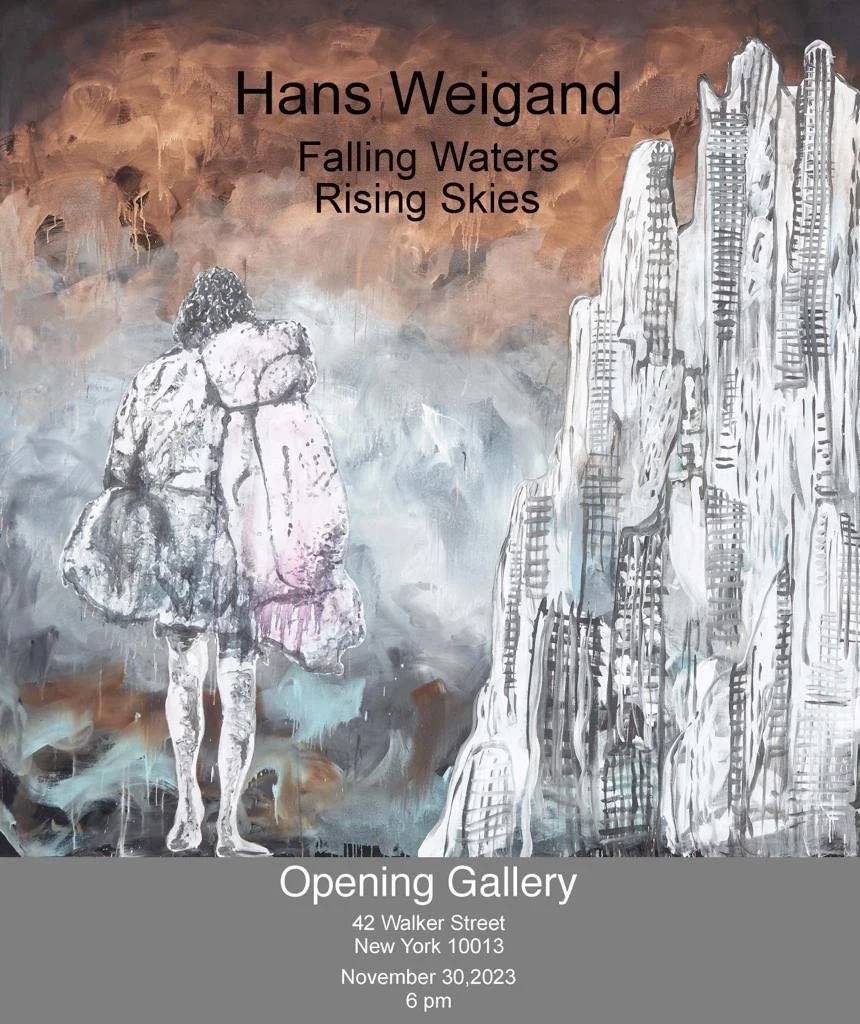
Christopher Knowles and Sylvia Netzer
Under construction.
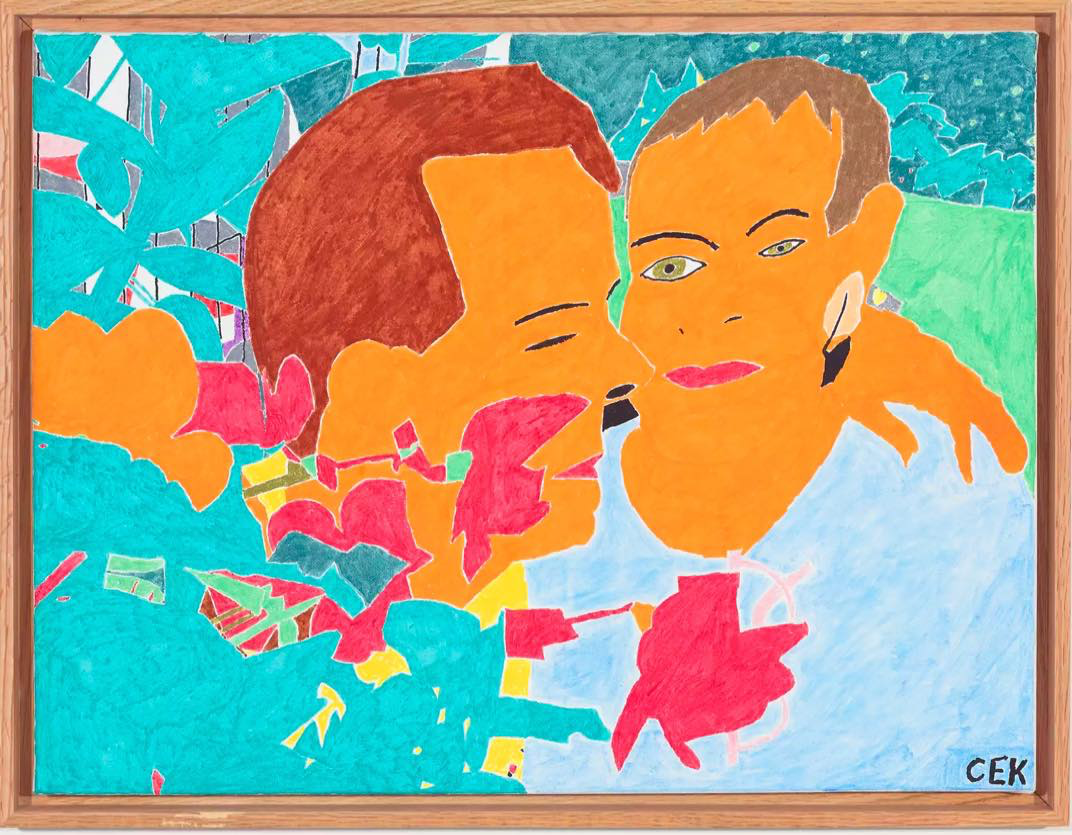
OPENING GALLERY
OPENING GALLERY
Conceptual satellite orbiting innovative and boundaries-pushing art
Exhibitions
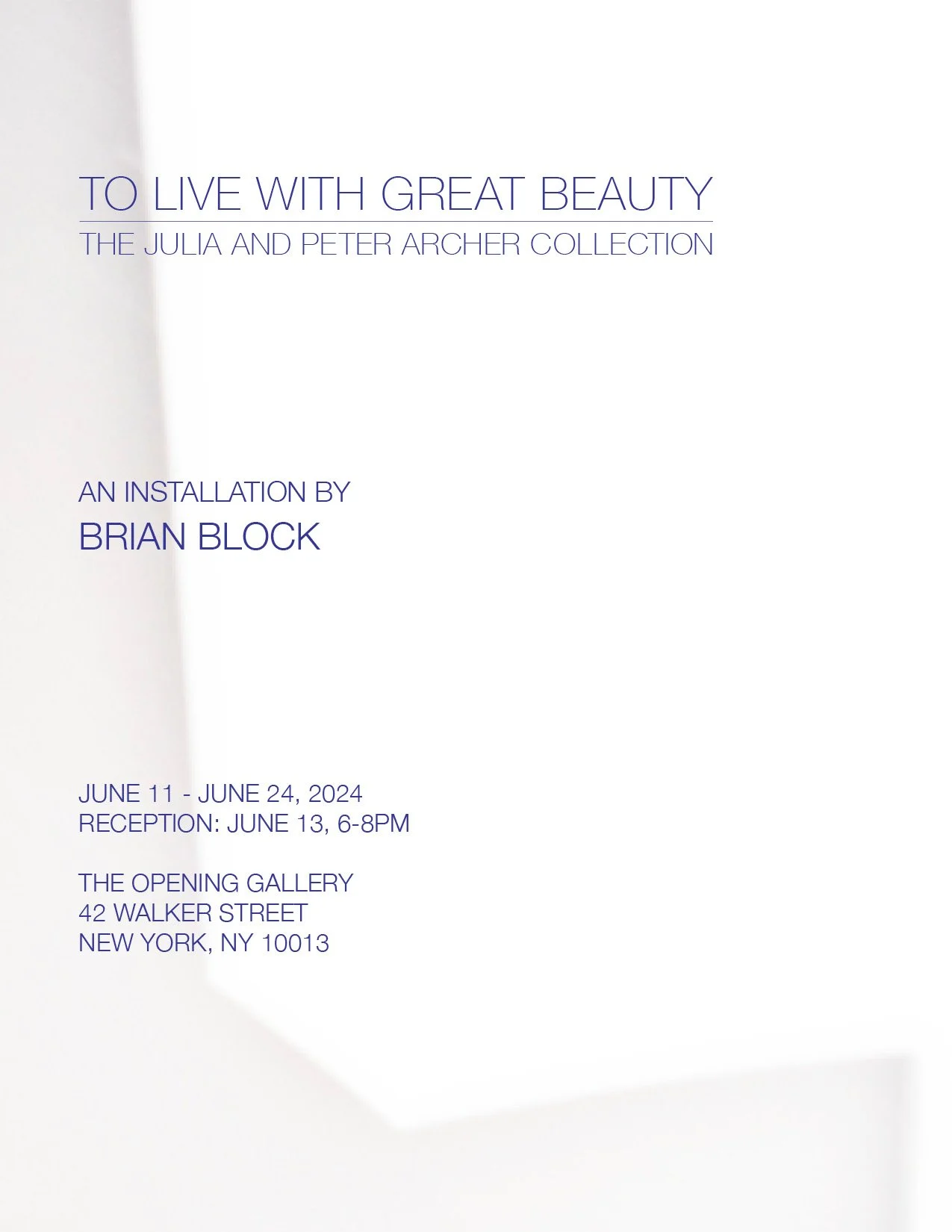
The Opening Gallery presents
"To Live With Great Beauty: The Julia and Peter Archer Collection"
Brian Block
Dates: June 11 to June 24th, 2024
Reception: Thurday, June 11, 2024 ~ 6pm - 8pm
The Opening Gallery 42 Walker St, New York http://theopeninggallery.com
"Money is abstraction par excellence" - Amelica Groom, Art Historian
The Opening Gallery is pleased to present "To Live With Great Beauty: The Julia and Peter Archer Collection" a solo exhibition by Brian Block curated by Sozita Goudouna, PhD. The exhibition takes form as an immersive installation in the aesthetic order of the auction preview show presenting six autonomous paintings and two sculptures from Block's new "Ciphers" series. The Ciphers are new forms of painterly and sculptural abstractions which are conceptually founded in relation to financial abstractions. Each Cipher work finds its origins in the artist's careful consideration and repurposing of choice factual details of a selected auctioned lot. The dimensions of the auctioned work provide the impetus into material realization. In the paintings these dimensions are rendered at 100% to scale in white paint on a field of pre-primed canvas, also of a white hue. In the Cipher sculptures, the dimensions of each auctioned sculpture is captured in a sealed volume of space for presentation within carefully created vitrines. According to Block, "the Ciphers are not homages or copies, they replace the auctioned artwork with the idea of it," thus, by elevating selected facets of the seemingly dormant auctioned lots into a new form of painterly and sculptural abstraction, Block severs the pictorial qualities of the auctioned lot from its financial dimensions to propose new modes of consideration.
The sculptural Ciphers which inhabit vitrines-as-sculptural-forms, are shaped by the artist's engagement with the "staging of the pictorial event" in art. Parallel to the ways in which the staging of works in an auction showroom shapes the reception of the works soon to be for sale, the vitrine as a sculptural form occupies a important place in the history of art and its display. This sculptural language of vitrine-structured abstraction may invoke a lineage of artists known for innovations in this rearm: Paul Thek, Jeff Koons and Mark Dion, most notably. However, the move engagement of Block's work with abstract financial immateriality eludes any reliance on its antecedents. Importantly in this creative matrix, Block connects his abstract works to financial considerations while occluding selected facts of each auction lot such as the artwork title, the artist name, date, provenance, buyer name. The choice pieces of information Block retains tellingly find their mention in the titles. What remains are words placing an emphasis on the material dimension of their absence: oil on canvas, notations of signatures, dedications, often the sold price in the currency of its sale. So, what of the term Cipher, the artist's chosen term of titling the works in this series? The origins of the term are found in the Arabic notions of the number zero, a numerical abstraction critical to the history of ideas. In our time, cipher denotes a non-entity or empty vessel which is at once a thing and a denoted vacant space to be occupied in the future by an as yet unknown entity or identity. "A Cipher is something which is at once an entity - almost transparent, almost a non entity - which can hold our projections lightly." Block has written. When told recently by a curator of the noted comment by Rothko that "there is no such thing as a good painting about nothing," Block added "it depends upon which nothing one is referring to." The exhibition marks the second project by Brian Block engaging financialization and its related perceptual shifts, following his "Notes of F. Wott: File 12: On Money" of 2022. This street-posted print project is driven by a compendium of thoughts and ideas on what Block as called financial perception: "the influence of financial values as they are directed upon other forms of reality."
Bio
Brian Block
Brian Block's work derives from original research into the language, ideology, and reality production methods of chosen "perceptual authorities." His work often involves repurposing the results of his research into art as a "form of counter knowledge." He lives and works in NYC and studies at SVA and the Whitney Independent Study Program. A full bio can be found at brianblockstudio.com
In Parallax
Artemis Kotioni
September 5 – September 18, 2024
Opening Thursday, September 5
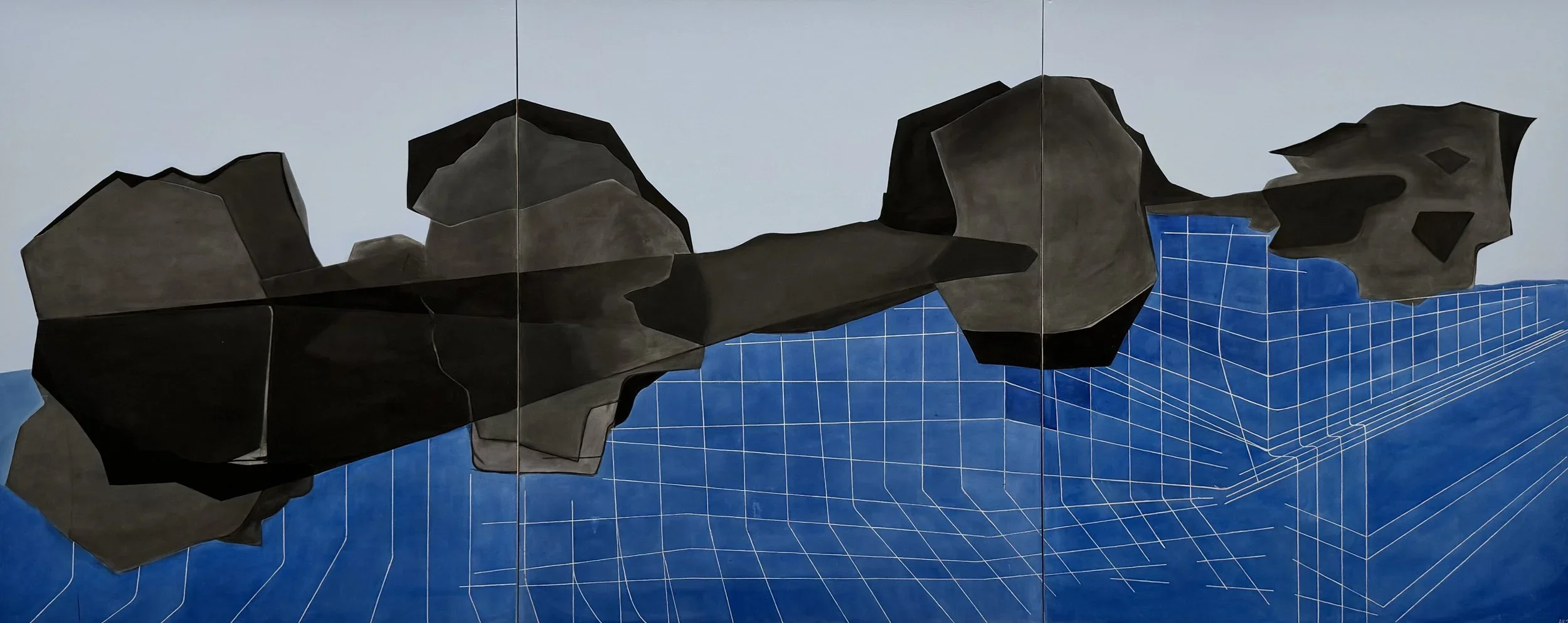
The Opening Gallery is pleased to announce In Parallax, a solo exhibition of works by Artemis Kotioni curated by Sozita Goudouna, PhD. Installed across the first floor of 42 Walker St, the exhibition draws on structures of earth, biological matter, and celestial forms to challenge our perception of the relationship between representation and abstraction while it investigates how the observed displacement of an object is caused by the change of the observer’s point of view. Contemplating the notion of the structural, sculptural, and architectural forms that make up the bodies we inhabit and the ground we stand on, the artist creates paintings as ‘places we haven’t been to but that we know exist,’ conjuring a pseudo-physics or instinctive-mathematic way of describing them.
The exhibition engages with several layers of inquiry that are bound by a central axis of ambiguity as it explores the space of in-betweenness. The first line of ambiguity informs both the ideation and the pictorial inquisition: that the work sits on the edge of abstraction and representation. Although the elements of the painting are abstract, each may act as a signifier beckoning to correspond to a signified. The multiplicity of the signifieds, the ambiguity of scale and of interior vs exterior, is what ultimately makes them tip over the edge and into abstraction instead of representation.In parallax, the artist investigates contemporary “atmospheric politics” by depicting an ominous atmosphere of a desolate future. The traces of the brutal, colonial nature of the structures that govern us are instilled in the work; exemplified in issues such as the exploitation of planet earth, as well as the race to colonize space. In this sense, the triptych might depict the act of fracking, the “Cross Sections of Matter” might reference the rover on Mars, and the “A Change in the Ocean” displays the inner workings of sunken internet cables. With this body of work Kotioni’s interests traverse the boundaries of traditional understandings of archaeology and the Anthropocene. The paintings pictorially refer to images of archeological spaces, the only real example we have of man-made structures abandoned and left returning to nature, a mirror to a future-scape. To imagine the future scape of the anthropocene, is also imagining the consequences of the travel frenzies, of broken-down vehicles on planets in space, a voyager that never returns.
Bio:
Artemis Kotioni (1995) employs a visual language that is rooted in geometry, her paintings are positioned in the threshold between abstraction and representation, creating an ambiguity that is mirrored in the content of the artwork. Themes that the artist works with combineexaminations of scale, geological matter, outer space, archeological ruins and the notion of the landscape, while testing ways of portraying perspective. Using oil paint, she develops techniques to layer transparency, as a way of both, creating depth and referencing the two- dimensionality of the painting surface. The artist has exhibited her work internationally and her pieces are part of private art collections. She received her degree in Studio Arts from Bard College (2017) and her MFA at NYU in 2024.
ORLAN: A Retrospective
September 25 — October 30, 2024
The Opening Gallery
42 Walker Street, New York
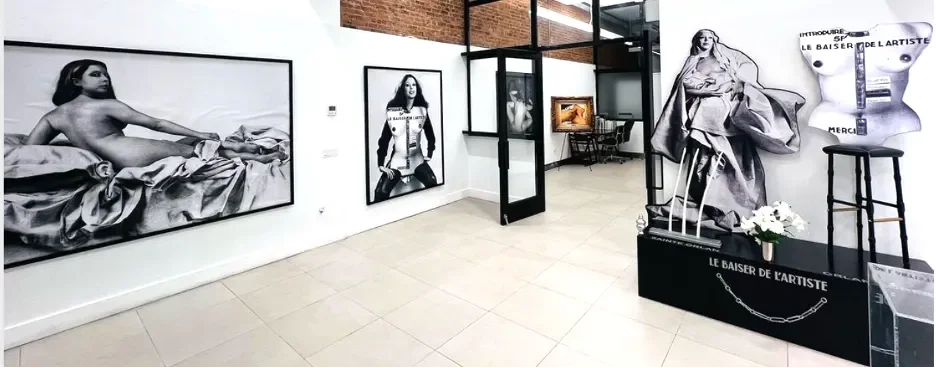
The Opening Gallery is pleased to announce ORLAN: A Retrospective, a solo exhibition of works by ORLAN curated by Sozita Goudouna, PhD. Installed across the first floor of 42 Walker St, this monographic survey attempts to provide an in-depth examination of ORLAN’s life, artistic practices, and contributions to contemporary art.
Offering an overview of ORLAN’s life, including her education, early influences, and career milestones, the exhibition will explore ORLAN’s conceptual framework, focusing on themes such as identity, the body, and the use of technology in art. ORLAN’s fearless exploration of identity and beauty continue to resonate within the art community and inspire ongoing exploration of these vital themes. Through her provocative performances, ORLAN engages audiences in critical discussions about beauty standards, identity, and the role of the artist.
Her works challenge viewers to reflect on their perceptions and biases, fostering a deeper understanding of how societal norms shape individual identities. ORLAN’s most notable work involves using her own body as a medium for artistic expression. By undergoing a series of plastic surgeries, she transforms herself into a living artwork, challenging conventional standards of beauty and raising questions about the commodification and objectification of female bodies. This radical approach redefines the relationship between the artist and their work, blurring the lines between art and life. The artist’s entire oeuvre confronts and critiques patriarchal standards of beauty and femininity, advocating for women’s autonomy over their bodies and identities. ORLAN’s performances often engage with themes of feminism and the role of women in art history, making her a crucial voice in feminist art discourse. Her performances serve as powerful commentaries on the societal pressures women face, positioning her as a significant voice in feminist art history. By confronting and subverting patriarchal norms, she has created a space for dialogue around women’s agency in the art world.
ORLAN is regarded as a pivotal figure in art history owing to her revolutionary contributions to performance art. Her performances often incorporate elements of humor and irony, further subverting traditional notions of beauty. By presenting herself in unexpected ways, ORLAN invites audiences to engage with and reflect on their own beliefs about beauty, identity, and the body. This engagement fosters a critical dialogue around the pressures women face regarding appearance and the societal constructs that shape these perceptions. In addition to her physical transformations, ORLAN utilizes digital media and technology to expand her artistic practice. Her works often incorporate video, photography, and interactive elements, reflecting the intersection of art and technology.
Her impact on art history is profound, as she has redefined notions of beauty, challenged societal norms, and inspired new dialogues within the art community. Her innovative approach and commitment to exploring complex themes continue to resonate, making her a vital figure in contemporary art.
ORLAN : A Retrospective at The Opening Gallery in Tribeca New York September 2024
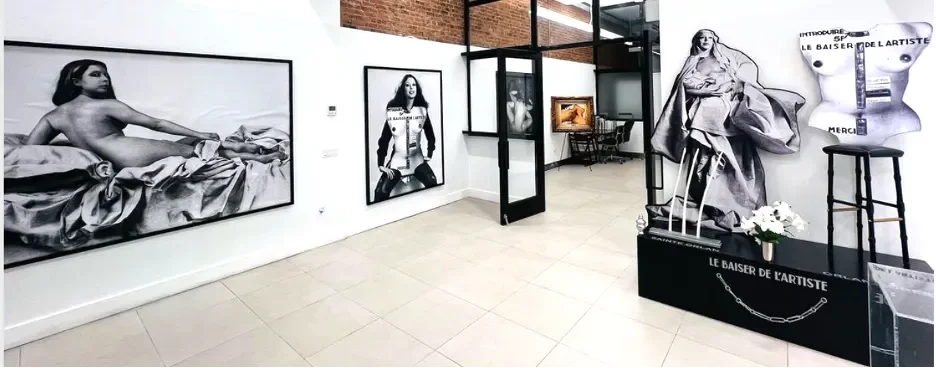
The Opening Gallery (42 Walker Street, New York, NY) presents a retrospective exhibition curated by Dr. Sozita Goudouna featuring landmark pieces such as Baiser de l’artiste and the opérations-chirurgicales-performances. The opening takes place on Wednesday September 25 and Thursday September 26. At both openings, ORLAN will be signing her autobiography, translated into English.
ORLAN is delighted to announce that her autobiography « Strip-tease : everything about my life, everything about my art » published in French by Éditions Gallimard, has been published in English by The Everyday Press.
The Maison Française of NYU (16 Washington Mews, New York, NY 10003) is hosting a solo exhibition by ORLAN, curated by François Noudelmann where she is exhibiting for the first time her new series I authorize you to be me, I authorize myself to be you. Following on from her self-hybridizations, the artist pays tribute to the great pioneering women of history who defended the same causes as her, but long before her, and who in some cases gave their lives in the process. This gesture of hybridization with the other allows her to give them an artist’s kiss and create an encounter between women despite the mists of time that separate them.
Ceysson & Bénétière NYC (956 Madison Avenue, New York City, NY 10021–2610) exhibits ORLAN in a new group show curated by Anna Mikaela Ekstrand with Katya Grokhvsky, Hanae Utamura, Bianca-Abdi Boragi, Ayana Evans, Yasmine Anlan Huang, Anna -Ting Möller, Linnéa Gad and Katie Hubbell.
Events :
- ORLAN holds a meeting-conversation with Tatyana Franck at the Alliance Française (22 E 60th St 1077, New York, NY 10022) on September 30 at 6 pm.
- She will give a guided tour of her exhibition at Ceysson & Bénétière (956 Madison Avenue, New York City, NY 10021–2610) followed by a signing on October 03, accompanied by curator Anna Mikaela Ekstrand and artist Katya Grokhvsky.
- Lecture at the Maison Française (16 Washington Mews, New York, NY 10003)
Bio:
ORLAN is an internationally acclaimed French artist. She is not tied to any one material, technology, or artistic practice. She creates sculptures, photographs, performances, videos, and videogames, augmented reality, artificial intelligence, and robotics (she has created a robot in her own image that speaks with her voice) using scientific and medical technics like surgery and biogenetic. Those are only mediums for her, the idea prevails, and the materiality pursues. ORLAN makes her own body the medium, the raw material, and the visual support of her work. It takes place as the “public debate”. She is a major figure of the body art and of “carnal art” as she used to define it in her 1989 manifesto. Her commitment and her liberty are an integral part of her work. She defends innovative, interrogative, and subversive positions, in her entire artwork. ORLAN changes constantly and radically the datas, which disrupt conventions, and “ready-made thinking”. She is opposed to the natural determinism, social and politic and to all domination forms, male supremacy, religion, cultural segregation, and racism, etc. Always mixed with humor, often-on parody or even grotesque, her provocative artworks can shock because she shakes up the pre-established codes.
ORLAN won the E-reputation award, designating the most observed and followed artist on the Web.
HONORS, AWARDS, GRANTS AND PRIZES
ORLAN has received several awards and grants throughout her career:
In 2020, ORLAN was made President of Hundred Heroines (London). In 2019, ORLAN received the Maestro Academico Emerito by Academia Di Belle Arti Di Roma delivered by the director of the Academia, Tiziana D’Acchille. In 2019, ORLAN was honored by the special price of the Woman of the year by the Prince of Monte-Carlo (Monaco). In 2018, ORLAN received the Hundred Heroines of Photography price from The Royal Photograhic Society at Paris Photo (Paris). In 2017 she received the International Award for Female Excellence from the Ministry of International Affairs in Genoa (Italy). In 2013 she received the E-REPUTATION Great Prize by Alexia Guggemos at Christie’s in Paris (France). In 2010, ORLAN was made Chevalier de l’ordre national du Mérite and received the medal from Fréderic Mitterrand, then Minister of Culture. In 2007, during the retrospective of her work at the Musée d’Art Moderne of her native town of Saint-Étienne, ORLAN received the Golden Medal of Saint-Étienne and the Bronze Medal of Saint-Étienne Métropole. In 2004 she won the top prize at The Moscow Festival of Photography (Russia). In 2003, ORLAN was made Chevalier de L’Ordre des Arts et des Lettres by the French Ministry of Culture. The medal was delivered by Jean-Jacques Aillagon, then Minister of Culture. In 1999 she was awarded the Arcimboldo Prize for digital photography from Hewlett Packard (France) and won the Griffel-Kunst Prize in Hamburg (Germany). In 1993 she received the Prix Mona Lisa and Prix Lavoisier (France). In 1989 and 1992 she received two grants from FIACRE (Fonds d’Innovation Artistique et Culturelle en Rhône-Alpes) for her research and residency in Chennai (Former Madras, India). In 1967 she received the Top Prize from the ‘Bourse du Travail’ in Saint-Étienne (France). ORLAN’s work is included in the collections of MoMA, LACMA and MOCA in LA, as well as Washington University in Saint Louis, and the Getty Research Institute where she was invited as an artist-researcher.
ORLAN created her famous seventh surgical-operation-performance, Omniprésence, in November 21, 1993 in New York, in collaboration with Sandra Gering Gallery this action ORLAN-BODY, which was broadcast via satellite, as there were no webcams at the time. In this staged performance, the artist had solid silicone implants, usually placed on the cheekbones to enhance them, placed on both sides of his forehead. The idea was to perform an operation that wasn’t supposed to bring beauty but, on the contrary, ugliness, monstrosity and undesirability. In the end, these bumps became organs of seduction. ORLAN says “it’s my convertible.” She creates post-operative photos from the Millennium Hotel, where she poses during the healing process in front of the Twin Towers on one side and the Three World Financial Center on the other. She calls them Refiguration of ORLAN, disfiguration of New-York and Women look like the moon, my eyes like flowers or Self-portrait with daffodils made by the body-machine six days after the operation.In 1983, ORLAN performed the mesuRAGE of institutions and streets at the Guggenheim Museum in New York. In this performance, she used her body as a measuring instrument: the ORLAN-BODY. A precise protocol allows the artist to record the number of times her body is contained within the museum space. In 2006, ORLAN was honored to be invited to take up a residency at the Getty Research Institute in Los Angeles as a researcher and artist. She created an ORLAN-BODY of books by asking acclaimed researchers in residence with her to give her a book, or the title of a book that influenced their thinking, their work and their lives.
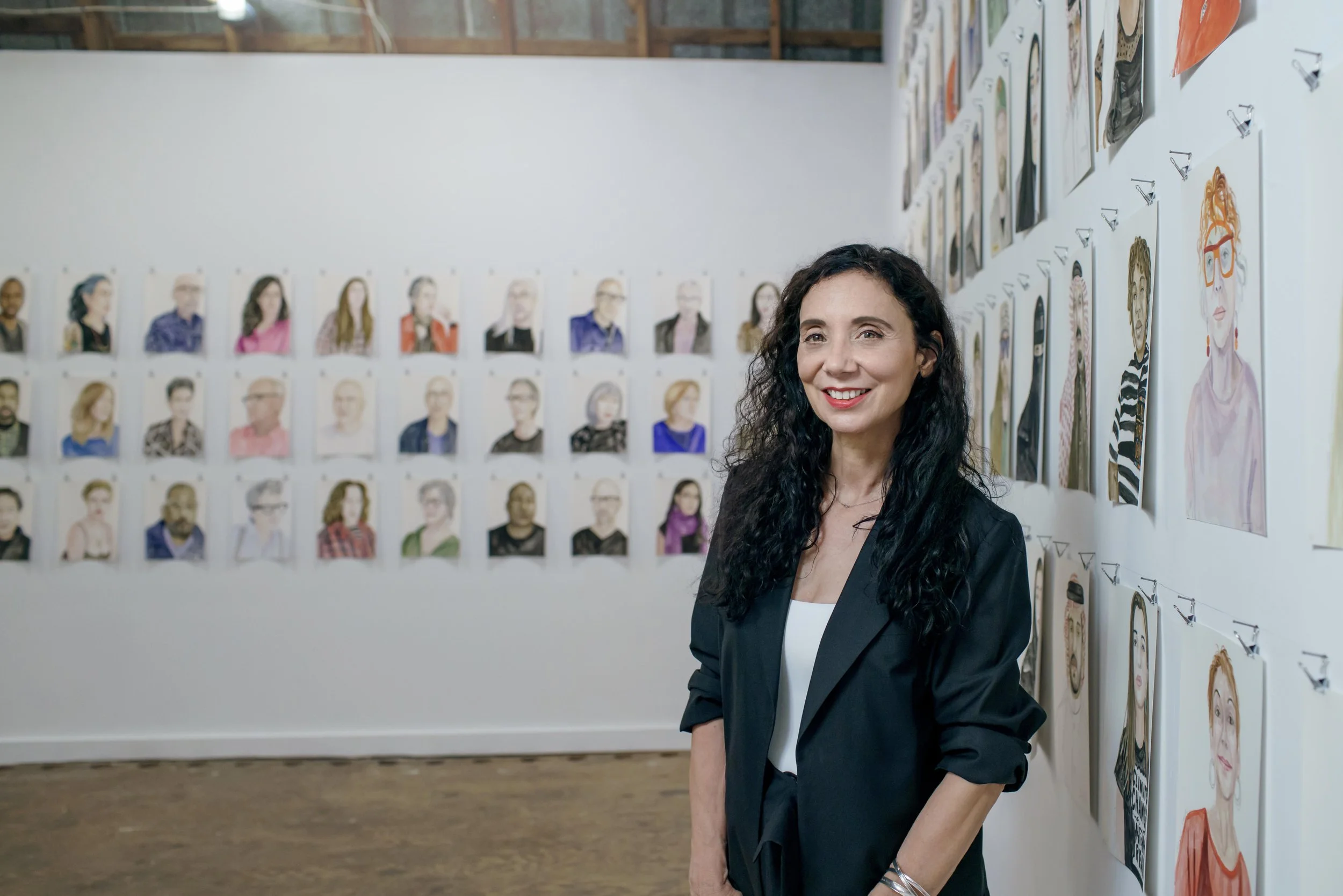
366: A WATERCOLOR PORTRAIT A DAY
Brenda Zalmany
November 7 - 14, 2024
The Opening Gallery is pleased to announce 366:A Watercolor Portrait A Day, a solo exhibition of works by Brenda Zalmany curated by Sozita Goudouna, PhD. Installed across the first floor of 42 Walker St, this exhibition is based on a research project that started in April 2015, when one member of the local arts community came to Zalmany’s studio to sit for a watercolor portrait each day during a leap year, consisting of 366 days. Because the artist works with the sketchbook flat, the subjects could observe and comment on their image as it was painted. Conversations informed the painting, and the painting informed the conversations. After the painting was completed, the artist photographed each sitter holding their portrait. The photos were made in collaboration, with the sitter often choosing the pose and the lighting. Each day, Brenda posted the new photo on social media. These posts gained a following, often with hundreds of “likes” and dozens of thoughtful comments.
Being painted is an intense emotional experience, wrapped up with ideas about mortality, self-esteem, and beauty. Discussions about career, inspiration, survival, aging, and child- raising ensued. The sharp contrast between the intimate shared experience of the portrait session and the public response through social media was exhilarating. Through social media, each subject was celebrated and an intricate web of connections was woven. 366 was experiential and whatever happened in the painting was evidence of that experience; the daily discipline, conversations, photography, and interaction on social media were as much the art as the actual watercolors.
Bio:
Brenda Zlamany is a painter who lives and works in Brooklyn, New York. Since 1982 her work has appeared in over a dozen solo exhibitions (including, in New York City, at Jonathan O’Hara Gallery, Stux Gallery, Jessica Fredericks Gallery, and E. M. Donahue Gallery, and, in Brussels, at Sabine Wachters Fine Arts) and numerous group shows in the United States, Europe, Asia, and the Middle East. Museums that have exhibited her work include the Museum of Contemporary Art, Taipei; the National Portrait Gallery of the Smithsonian Institution, Washington, D.C.; the Boulder Museum of Contemporary Art; the Museum of Contemporary Art, Denver; Frankfurter Kunstverein, Germany; the National Museum, Gdansk, Poland; and Museum voor Schone Kunsten, Ghent, Belgium. Her work has been reviewed in Artforum, Art in America, ARTnews, Flash Art, the New Yorker, the New York Times, and elsewhere and is held in the collections of the Cincinnati Art Museum; Deutsche Bank; the Museum of Modern Art, Houston; the Neuberger Museum of Art; the Virginia Museum of Fine Art; the World Bank; and Yale University. Zlamany has collaborated with authors and editors of the New York Times Magazine on several portrait commissions, including an image of Marian Anderson for an article by Jessye Norman and one of Osama bin Laden for the cover of the September 11, 2005, issue. Grants she has received include a Peter S. Reed FoundationGrant (2018), Fulbright Fellowship (2011), Pollock-Krasner Foundation grant (2006–07), New York Foundation for the Arts Artists’ Fellowship in painting (1994), and Jerome Foundation Fellowship (1981–82). She received a BA from Wesleyan University in 1981.
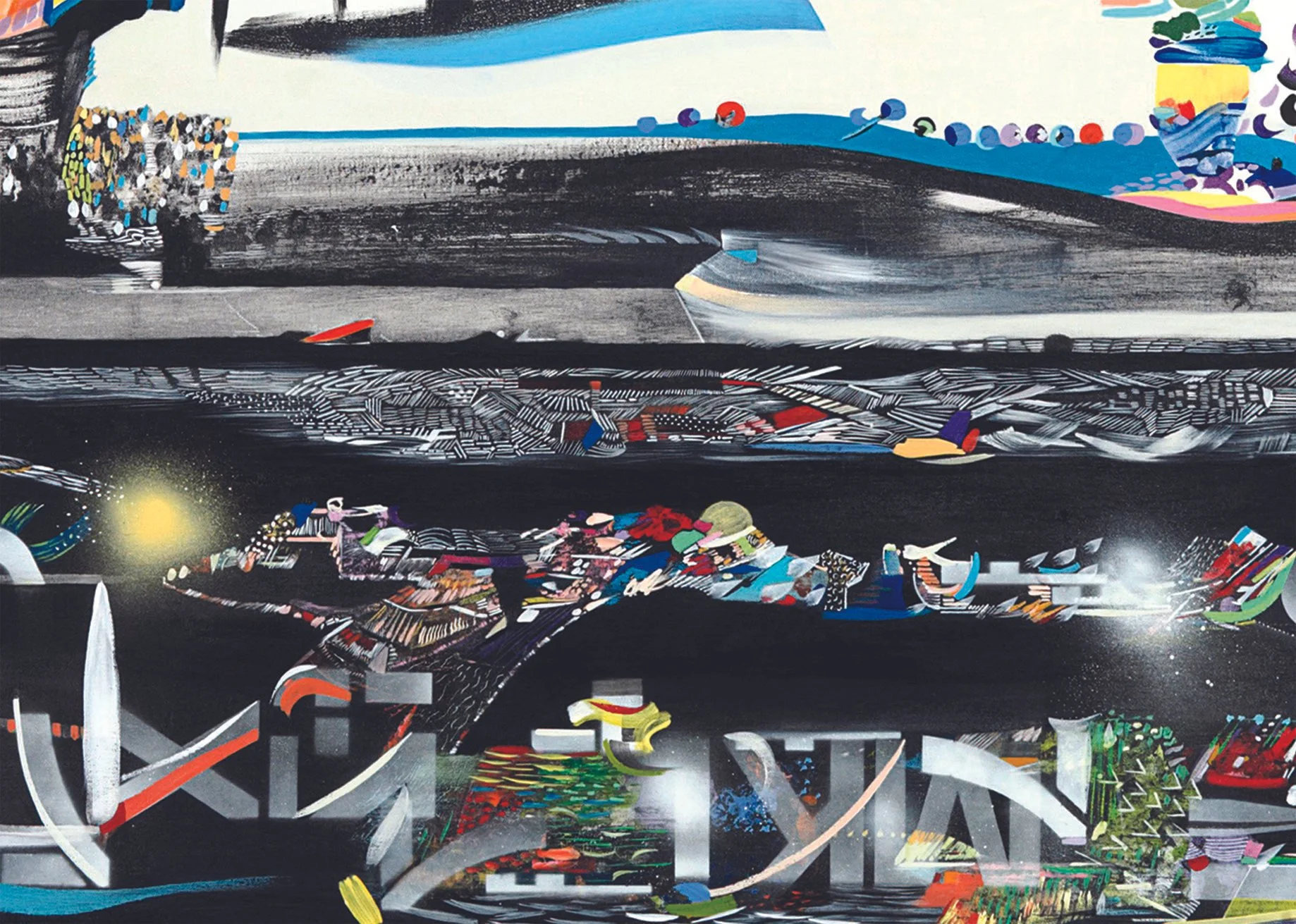
Thinning Veils, Changing Timelines
Regina Scully
November 15 th – December 10 th 2024
The Opening Gallery is pleased to announce Thinning Veils, Changing Timelines, a solo exhibition of works by Regina Scully curated by Sozita Goudouna, PhD. Installed across the first floor of 42 Walker St, the exhibition draws our attention to ideas of discovery and exploration and the concept of painting as a mirror for our personal experiences of reality as well as the opening up and deepening of our collective perception.
Thinning Veils, Changing Timelines explores how we are expanding our knowledge of the many different hidden dimensions, parallel worlds, and universes around us. As our ways of seeing begin to incorporate more intuition and ways of communicating telepathically, the veils that hang between us and these other worlds become thinner. With the thinning of the veils comes our ability to see beyond the current limitations and confinements we have agreed to believe. Being able to see further into new worlds opens up the gates and allows us to break free of illusory limitations and even to quantum leap—to change into new timelines—so we may individually and collectively heal—and feel the empowered state we are meant to experience. Similar to the way in which early explorers discovered land masses, continents and bodies of water on our 3-dimensional earth, the new frontiers of exploration are in our minds and in our hearts.
Scully’s paintings refer to the primordial and to the futuristic. They become both a map of the lands we have discovered on earth and a mindscape where we feel new pathways emerge into other worlds and universes. They possess a timeless nature and the ability to mirror and hold the expansion of our perception in our collective evolution. The late, well-known art critic in New Orleans, D. Eric Bookhardt, described Scully’s “flair for fusing arcane metaphysics and modern abstraction in ethereal paintings” and how “It is unusual to encounter a body of work that touches on the extremes of existence, from the macro to the micro, from the cosmos to the human form, all coexisting together.”
The artist perceives each painting as a Mindscape — a medium for strolling through one’s own mind, where each person creates their own reality based on their own personal associations, memories, and ways of perceiving the world. Collectively, humanity is realizing the multi-faceted of our perception and that each person’s experience of the same subject can be vastly different. Painting, one of the oldest mediums of expression, the artist explains, becomes a powerful means for understanding this concept. There is a history of looking at paintings as an entrance into another world one can walk through and discover with the mind’s eye. In Japanese landscapes, there is also a concept of escaping into the artwork and traveling out of one’s 3-D environment into a world that conjures the unique way in which each person perceives reality. Scully’s natural intuitive way of using different perspectives in each painting has contributed to a natural affinity of her work with historical Japanese landscapes. In her solo exhibition at the New Orleans Museum of Art, her paintings were exhibited next to a selection of Japanese landscapes. The artist’s process is a layered journey itself for the artist while she works. Scully starts each painting in a different way-- with splashes of paint or with sponges soaked in color or perhaps with rhythmic brushwork on the canvas—she always employs a different way of jumping into the unknown and into the blank canvas. She then builds and forms each one, often with many layers over time--adding, subtracting and sanding between layers. Some paintings circulate between her studio and her canvas room for years before they are ready to enter the world.
Scully says her paintings “need to marinate and have the time they need to take on a life of their own. They have to tell me where they will be going and I have to be able to imagine what they might become. And then in the act of painting, surprises and unexpected exciting directionspresent themselves. Figures and objects unexpectedly start to form and want to be brought to the surface. The directional currents of the composition must be at degrees that allow the eye to flow through the passages and explore without interruption or barrier. Scully’s studio is in her home, and she allows her art to spread out into her everyday world. She feels that being able to see her work at different times, in different lighting, and most importantly, when she is feeling different emotions, opens up communication between her paintings and the collective. “We are all connected and we are all one,” Scully explains, “The separation and division we feel between each other is only an illusion put in place to make us feel powerless and alone. As an artist it is my job to be a recorder and a wireless for the collective to express itself. By definition a wireless or a radio receives waves and converts them into a usable and perceivable form, and this is what I humbly try to do when I create. I try to build deeply-layered worlds which the viewer can journey through, where they can find personal memories, associations, and experiences on their own. I don’t try to tell people what to see or even direct them to see anything specific with any agenda, I just try to create a painting where they can see their own sights and selves within the whole.” When hearing people's perceptions of her paintings, Scully says “It is like they are a part of the creation of the painting too and this gives me this other sense of purpose—to provide a space where others can feel the act of being creative in their own right.”
Scully explains how five viewers each recall five different places they are reminded of when looking at the same painting, and how, despite all of her time spent with each one, there are still new objects, figures, and spaces that viewers point out, which Scully herself has not seen before. “Everyone contributes,” Scully says, “The paintings become inclusive rather than exclusive and I think this emphasizes the connection between us all, and how we can openly experience and feel this connection through the universal language of art.”
Bio:
Regina Scully is based in New Orleans. “Thinning Veils, Changing Timelines” is her third solo exhibition in NYC. She started art classes at the YMCA when she was 6 years old in Norfolk, Virginia, where she grew up. Surrounded by the Chesapeake Bay and Virginia Beach, water and boats were often subject matter and still appear in her paintings. If boats are the vehicle to go deep into the vast ocean of human consciousness, Scully likes to steer her ship into many realms and worlds and explore both the large perspective of the landscape as well as the minute details she finds among the architectural elements, directional lines, and undulations of the terrain in her imaginary microcosmic universal worlds. The unique spaces she creates in her Mindscapes become vistas for poetic vignettes, whimsical characters, abstracted objects, slices of architecture, and an exploration of paint and color. Regina Scully received her BFA in Painting from Rhode Island School of Design and her MFA in Painting from University of New Orleans. She has had solo exhibitions in New York City and numerous solo exhibitions in New Orleans. Prior to her solo show at the New Orleans Museum of Art, she was represented in solos at Volta, NY and the Seattle Art Fair. She showed in 2019 in a two-person exhibition in Chelsea at the Highline Nine Galleries and one of her paintings was acquired in 2021 for the lobby at World Trade Center, Tower 7, NYC where it is permanently installed. She is a recipient of the Louis Comfort Tiffany Grant. Her work is in many different collections, two of which are the Microsoft Art Collection which acquired two of her paintings, and at the New Orleans Museum of Art, which also acquired two pieces. **Scully’s paintings are currently on view September 6th – November 2nd at The Milton Resnick and Pat Passlof Foundation, NYC, 4-person exhibition, Abstraction by Any Other Name, curated by Dan Cameron.
The Opening Gallery presents
"Confessions"
Andres Serrano
Date: April 12
New York
The Opening Gallery and ERIS ART are pleased to announce an exhibition of new work by Andres Serrano. Opening Saturday, April 22 at 42 Walker Street, this will be the artist’s first significant foray into painting. The exhibition celebrates the release of Confessions: a highly distinctive artistic collaboration between Serrano and the acclaimed poet Gabriele Tinti.
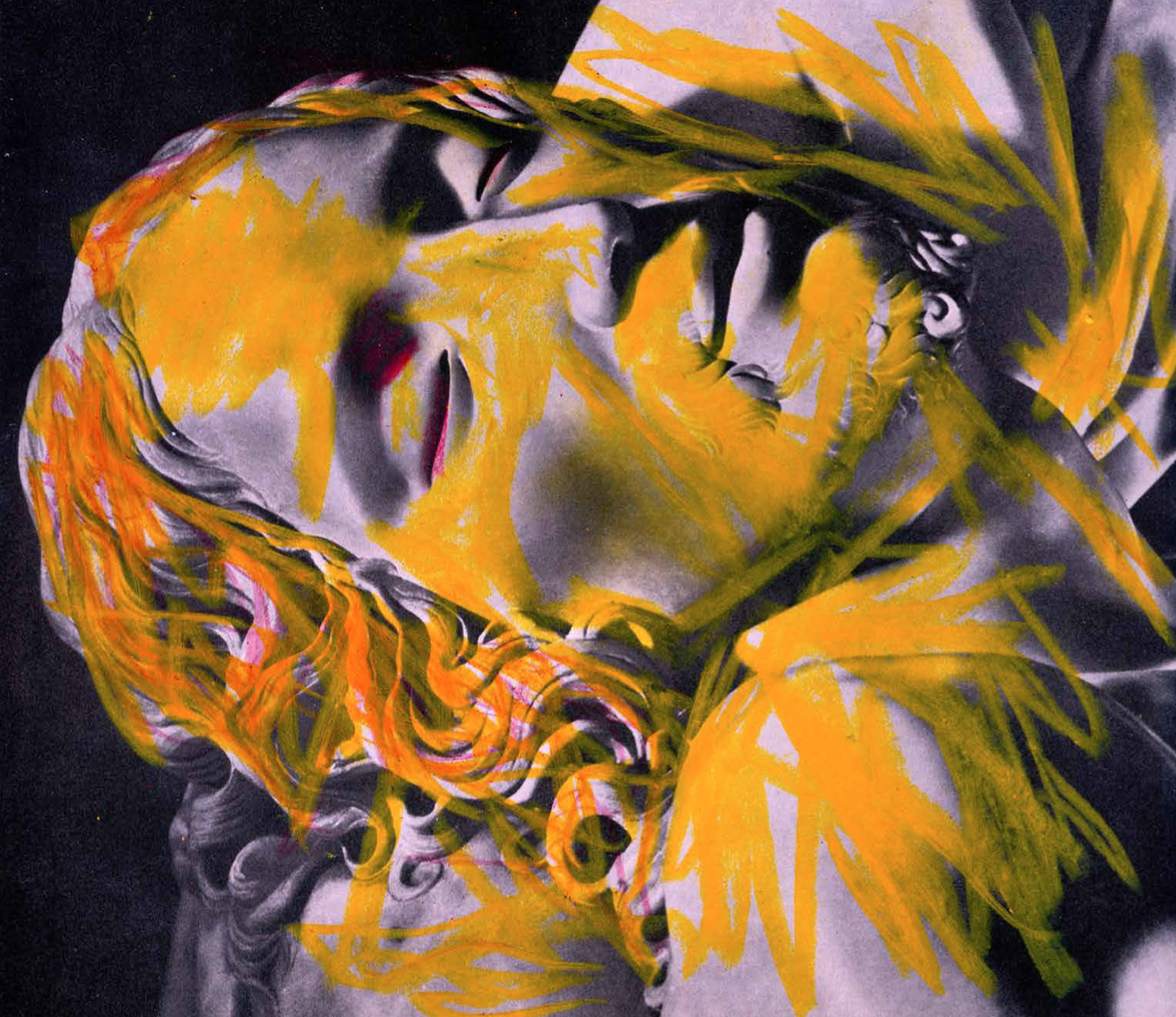
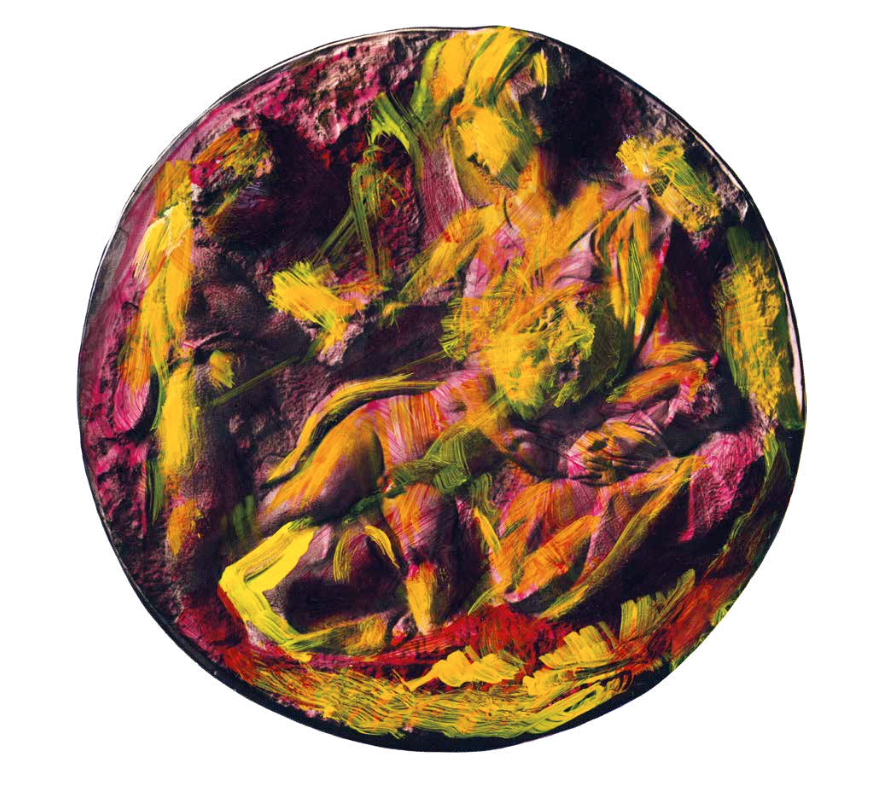
Serrano is one of the world’s most renowned photographers. His new works mark a departure from the medium with which he is most closely associated, while also exemplifying the imagination and critical intelligence that he has always brought to bear upon it. They originated as oil pastel drawings that Serrano made over black and white photographs of sculptures by Michelangelo, in a process that he likens to automatic writing: “The resulting images are different from the pictures that inspired them,” he writes, “but I hope the spirit of Michelangelo is there.” Serrano’s Confessions images amount to a formidable engagement not only with an artistic predecessor, but also, like so much of his work, with Christian iconography. Embodying a very particular kind of beauty, they lend a new emotional force to ostensibly familiar artistic depictions of religious narratives. Serrano’s collaboration with Gabriele Tinti has led to a haunting meditation on religion, violence, and physicality. Tinti, author of the Montale Prize-winning collection Ruins, has produced a sequence of poems that are as remarkable for their lyrical expressiveness as for their forceful compactness. Often disquieting and always uncompromising in their vision of the human capacity to do harm and be harmed, these poems are Tinti’s most impressive body of work to date.A deluxe, signed, numbered special edition will be available for sale at the exhibition, and the launch event will feature a reading of selected poems from Confessions by the actor Vincent Piazza (Boardwalk Empire, Jersey Boys).
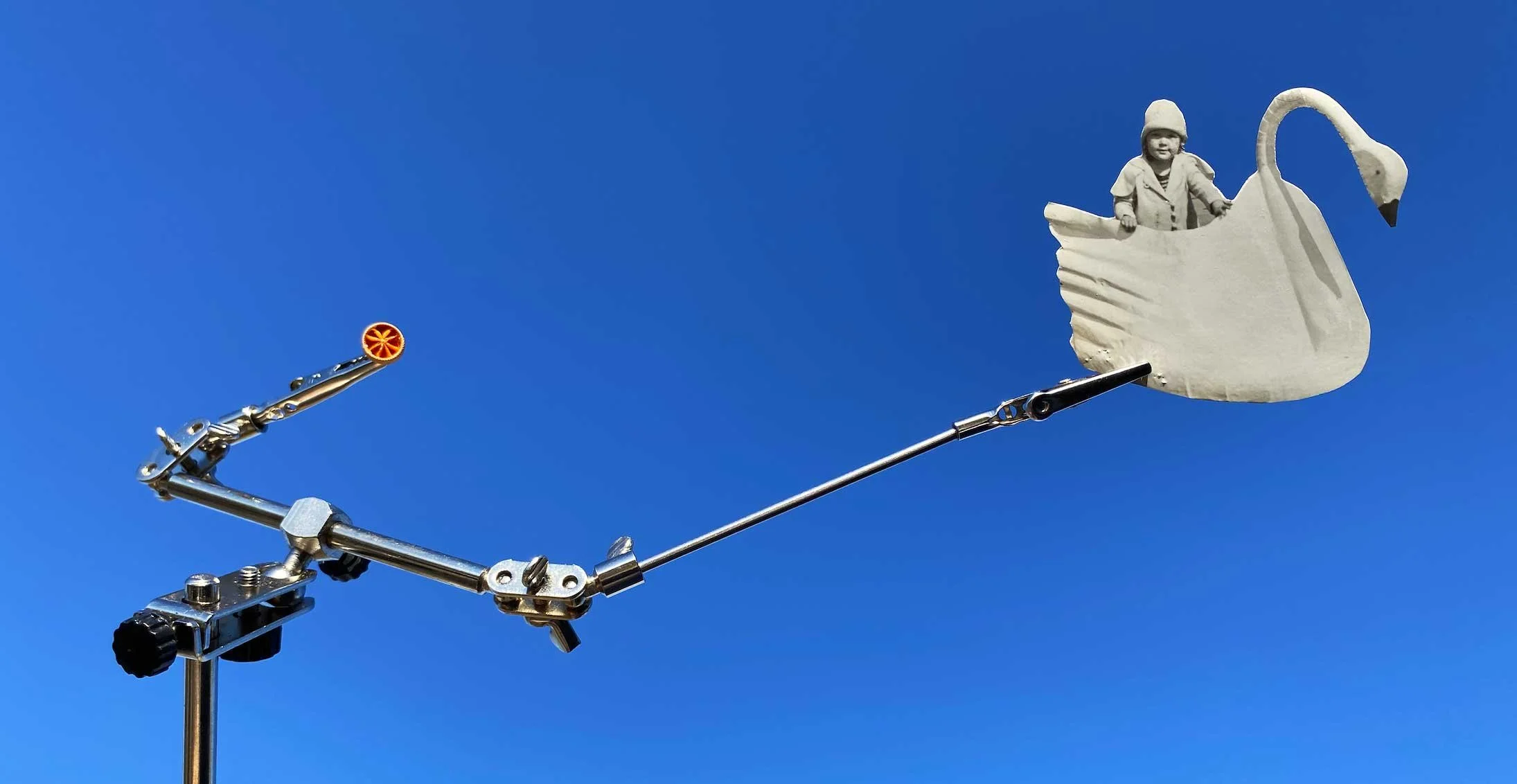
A Box of Birds
ESTAR(SER)
May 17- June 9
New York
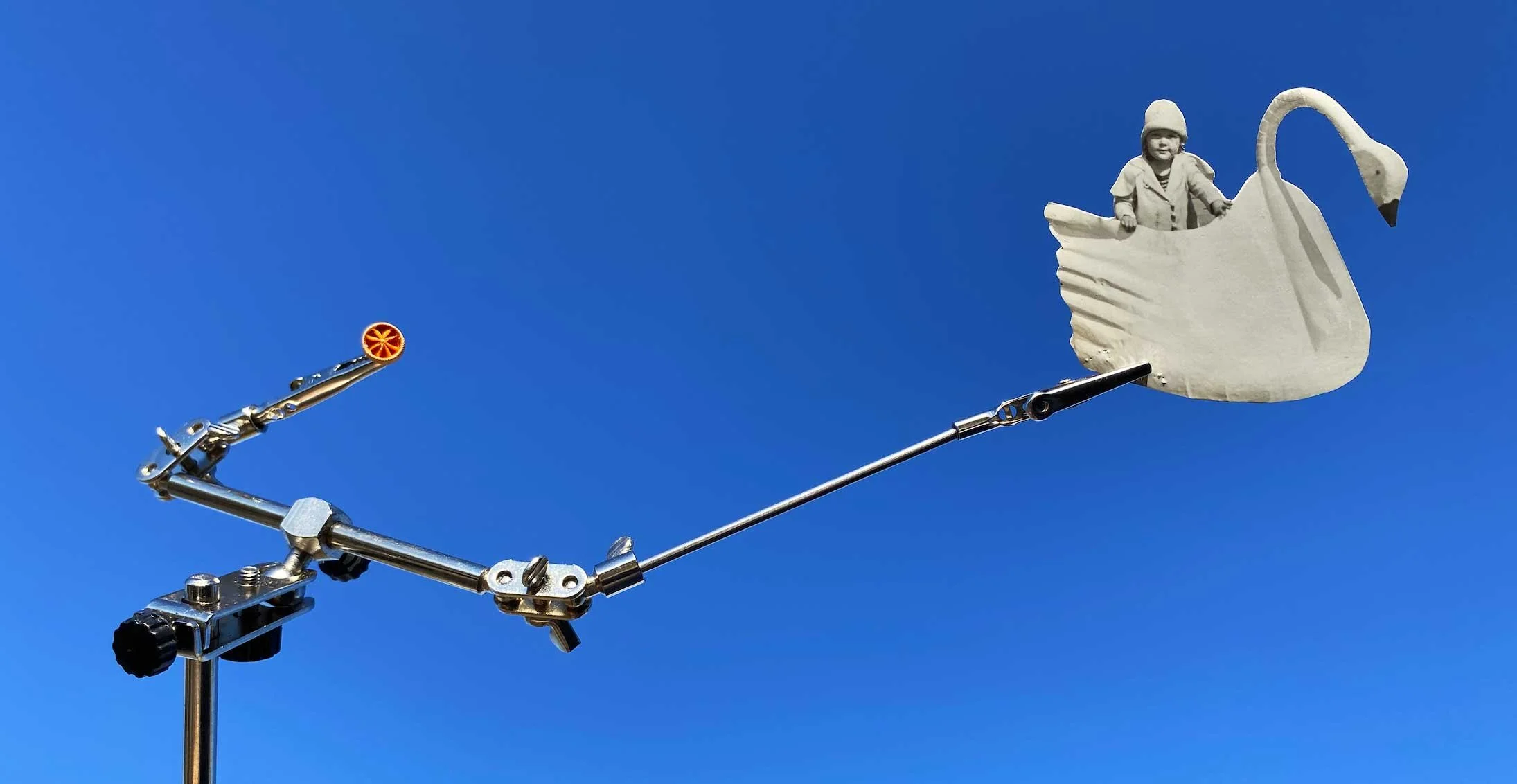
The Opening Gallery is pleased to announce A BOX OF BIRDS, a rare exhibition of artifacts and documentation associated with the Avis Tertia or “Order of the Third Bird.” Curated by Federica Soletta, and running in conjunction with the release of a new, ten-year retrospective special publication by the research collective ESTAR(SER), this show brings together two installation pieces not before publicly accessible in New York City: the “Frye Trunk” (a portmanteau collation of historical attention-prosthetics and ephemera recently shown in Seattle and Boston); and the “Milcom Memory Box” (previously only available by private appointment at the American Academy of Arts and Letters, in upper Manhattan). Other important holdings from the “W-Cache” repository of ESTAR(SER) will also be on display. For related information about a number of recently deaccessioned items that may be available to interested parties, please contact: Gallucci Tull, Ltd, (Los Angeles).
2022
Site under construction
About
The Opening Gallery at 41 Division st, LES, is a nonprofit cultural venue and initiative established in 2022 at 42 Walker in Tribeca, New York, showcasing global and local artists, practice-based research, as well as performance, live events, and educational programs. Exhibited artists are included in US and international museum permanent collections.
Exhibitions include visual and performing arts and music events, with monthly public programs spanning a wide range of topics. The Opening Gallery has presented international and US based artists including Andres Serrano, Charles Gaines, Jimmie Durham, ORLAN, Leslie Hewitt, Jimmy Raskin, Agnieszka Kurant, Olu Oguibe, Martha Rosler, Allen Ruppersberg, Sagarika Sundaram, Victoria Bartlett, Michele Zalopany, Kenneth Goldsmith, John Zorn, The Shoplifter, Luciano Chessa, Daniel Firman, Hans Weigand, Raúl Cordero, Jessica Mitrani, United Nations artist-observer Yann Toma, Warren Neidich, Coleman Collins, Constance DeJong, Chrysanne Stathacos, Leah Singer, Ronan Day-Lewis, Orit Ben Shitrit, Undisclosed Recipients, Mia Enell, Brenda Zlamany, Regina Scully, Mark Borden: Egospeed and Bill Hayward.
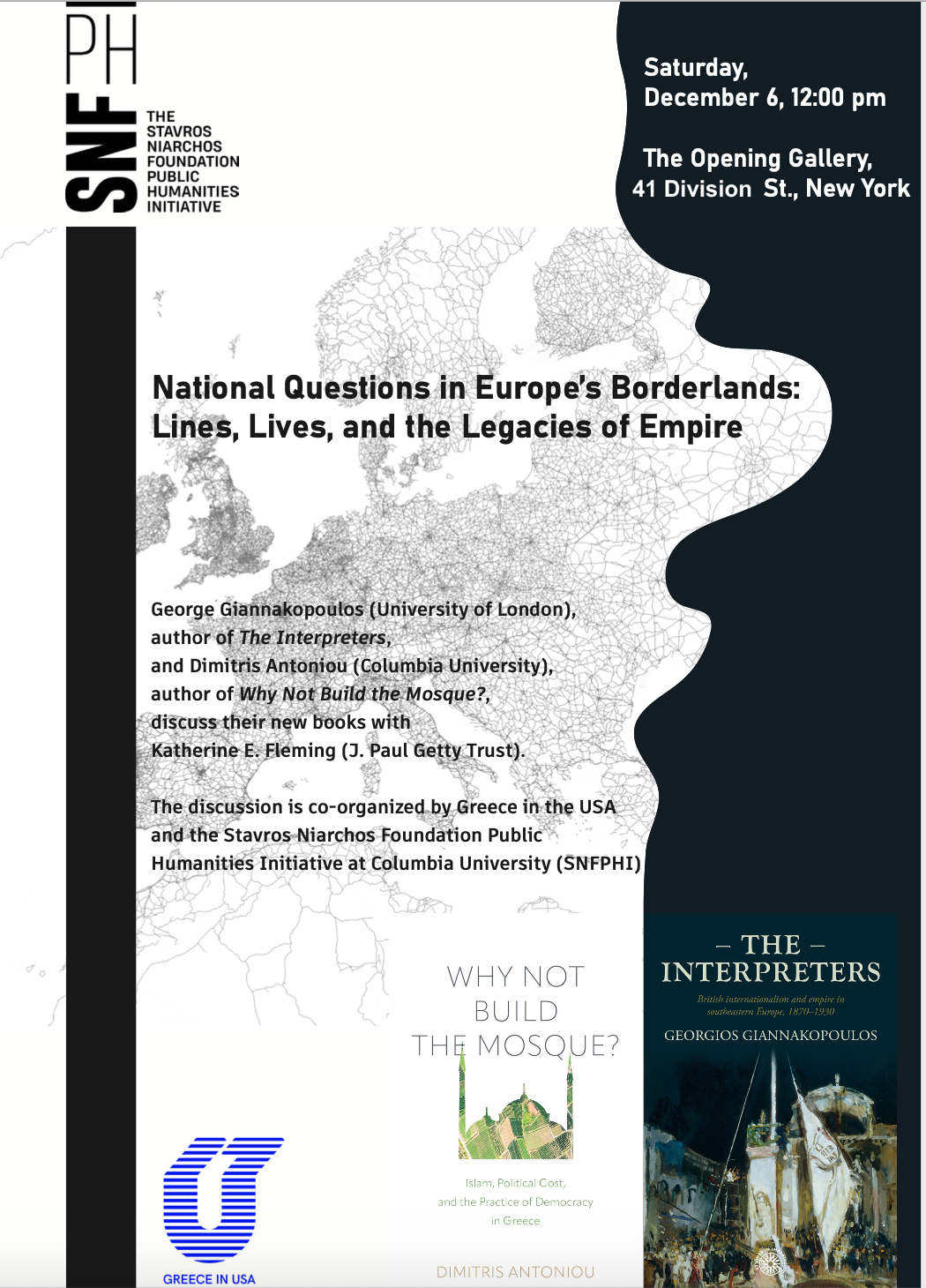
During spring 2024 the gallery presented a selection of Watermill Center former artists-in-residence including Eileen O’ Kane Kornreich, Christopher Knowles with Sylvia Netzer, D. Graham Burnett and "The Order of the Third Bird," and Brian Block. The Opening launched Soho Loft Project in 2024 and has hosted two editions of the New York Arab Festival and events organized by MoMA curators and collaborates with Sorbonne Art Gallery in Paris. The nonprofit cultural venue and initiative supported a heteroclite art ecosystem that attempts to go beyond prevalent gallery models in Tribeca. The Opening was founded by Sozita Goudouna, PhD and in 2023 partnered with the London-based publisher Eris to present exhibitions related to publications by Kenneth Goldsmith, Andres Serrano, ORLAN, and Lucas Samaras among other acclaimed contributors and artists. The publishing art program has hosted readings of Edward Said's poems by Simon Critchley, Stathis Gourgouris, and Udi Aloni, as well as readings of Gabriele Tinti by Vincent Piazza.
Founding Director: Sozita Goudouna, PhD
Executive Associate: Zoe Rebecca Radoglou
Production Associates: Adam Brown
Basha Shapiro
Ayla Wu
Myrto Panagakis
Head of Communications: Ernesto Estrella
iInternational Partnerships: Dimitra Gkoutzou
2025
Under Construction
2025
November 14 – December 8
The Opening Gallery is pleased to present the group exhibition “Generative Alterities” Installed across the 41 Division st Storefront, the exhibition inaugurates The Opening Gallery’s program of projects at 41 Division ST, Lower East Manhattan, 10002, NYC
In an era of hardened borders and algorithmic feeds, this group exhibition asks: Can difference be our most powerful tool for regeneration? The future is generative. The future is alterity.
Confronting the rise of "tech feudalism," the exhibition creates a charged space for dialogue between artists from the Global South & Global North. It's a generative collocation of perspectives on power, and the social narratives that shape our world. Experience performances, installations, and powerful critiques that challenge passive consumption.
In the shadow of a resurgent market-oriented politics in the United States—a moment defined by hardened borders, cultural parochialism, and the aggressive consolidation of power—the question of technology's role in society has reached a critical juncture. Artificial Intelligence, often heralded as a neutral, progressive force, is rapidly being subsumed by a new "tech feudalism," where a handful of corporate sovereigns command our data, our attention, and increasingly, the very narratives that shape our reality. This is not merely a business model; it is a cultural and political project that thrives on polarization and the erosion of shared, complex truths. The group exhibition Generative Alterities confronts this reality by proposing a radical methodology: the strategic and critical juxtaposition of voices from the Global South and the Global North. In a climate that weaponizes difference, this exhibition insists that difference itself—when placed in a careful, curated dialogue—is the most potent source of intellectual, aesthetic, and political regeneration. It is a space of friction and fusion where the politics of identity, particularly the representation and embodiment of gender and femininity, are rigorously explored. It is not about a harmonious fusion, but about creating a charged field where distinct historical experiences and critical perspectives can interact, conflict, and ultimately generate new ways of seeing and thinking beyond the simplistic binaries that dominate our discourse. Curated by Sozita Goudouna, PhD this exhibition expands on the tradition of situating art within urgent geopolitical frames. The included artists, from diverse origins, employ strategies of liveness and theatricality to implicate the viewer, challenging the passive consumption encouraged by both algorithmic feeds and authoritarian posturing.
FEATURING ARTISTS:
James Hyde • Nan Goldin • Max Blagg • Annu Yadav • Jamie Martinez • Lloyd Foster • Anna Sofie Jespersen • Alina Yakirevitch • Mia Enell • Oliver Halsman Rosenberg • F-Twins • Irina Movmyga • Anne Deleporte • Mark Borden (Egospeed) • Undisclosed Recipients: Victoria Bartlett & Zack Joslow • Artemis Kotioni • Brenda Zlamany • Alina Bliumis • Jeff Bliumis • Anna Samara • Aphrodite Desiree Navab • Soterio Bezio • Marita Pappa • Eleni Paridi • Hans Weigand • Joan Bankemper • Clintel Steed • Matthias Van Arkel • Radoslav Maglov • Ellen Frances
Contact us
Opening Gallery
41 Division st 10002, NYC
Previous location : 42 Walker st, 10013, NYC
About

Locations
New York
Press
International Partnerships